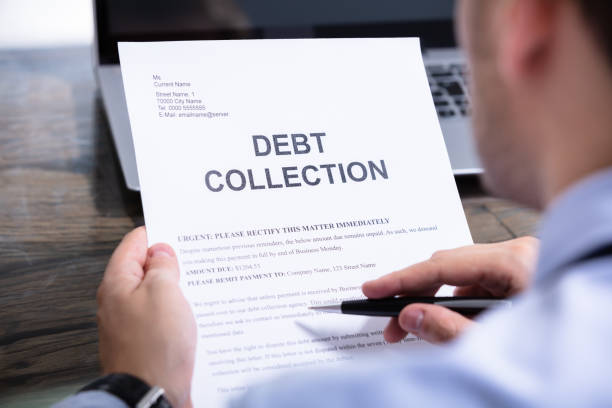
Have you ever face a situation where a friend or an acquaintance borrows money from you and promises to return which failed to do so? Or have you ever face a situation where you sold goods or provided services to a client but unable to receive the sum of the goods delivered or the payments for the services rendered? For ease of convenience, the one who owing the money to others is called debtor while the person whose money is owed is now called creditor.
If you are facing one of the circumstances above and all your efforts to recover the outstanding sums or payment have been unsuccessful, it is time for you to consider to recover the sums due and owing to you by way of commencing legal action, i.e. debt recovery against the debtor.
Debt recovery in Malaysia refers to the process of collecting unpaid debts from the debtor who owes money to the creditor. Primarily, it is important for the creditor to know and jot down when is the debt actually starting owing from. The reason being that, generally, a creditor may only recover his debts within six (6) years from the date of the debt actually owed as regulated by Limitation Act 1953.
An example would be that A had signed a contract and delivered the goods to B on 01.01.2023, but B failed to pay for the delivered goods for whatsoever reason. A would only have an actionable legal rights against B until 31.12.2028. However, if B has acknowledged the debt during the said period, the limitation period would now starting to run again from the date of acknowledgment of debt.
More often than not, the debt recovery process in Malaysia will be conducted as follow:
- Negotiation Period
Upon default of payment, it is quite common for the creditor and the debtor to commence various discussions, phone calls, meetings between each other to discuss, propose and counter propose for settlement plan intending to resolve the issue amicably.
- Formal Demand Period
In the event the discussion doesn’t work, the creditor will issue or engage a legal firm to issue a formal demand against the debtor where it will particularise the amount due and owing. In addition, it will stipulate a specific deadline for the debtor to comply with the repayment schedule, failing which, the creditor will proceed with legal action.
- Legal Action Period
The creditor should consider the option of filing a civil suit in a court against the debtor in the event that the debtor still practises an ignorant or “don’t care” attitude despite the fact that a Demand has been served on the debtor. As a side note, the monetary jurisdiction of court is divided into three tiers, wherein for claims less than RM100,000.00, it will be filed in a Magistrate Court; for claims more than RM100,000.00 while less than RM1,000,000.00 (1 million), it will be filed in a Session Court; and for claims more than RM1,000,000.00 (1 million), it will be then filed in a High Court.
- Execution and Enforcement Period
When a creditor obtains a court judgment against the debtor, the debtor may opts to comply with the court order or stay ignorant and refuse to comply with the court order. The creditor now has enforceable legal rights to exercise and to enforce the court order against the assets owned by the debtor, including writ of seizure and sale, garnishee proceedings, or to summon the debtor to court to provide a proposal of repayment (judgment debtor summons), or may opt to file a bankruptcy proceeding or winding up proceeding against the debtor if it reaches the monetary threshold as required by the law.
Last but not least, we thank you for your time and wish to emphasise that getting back your money from the debtor is a protected legal right under the legal regime in Malaysia. We wish to express our understanding and we do comprehend the frustration faced by you when the debtor is acting ignorant and refuses to pay back your hard earned money. Let us utilise the available rights under the current legal regime to protect your interest and to recover your money fairly, legally and justifiably.
Kindly contact us at +6011-5657 1350 or reach us via email at lowzhigeneral@gmail.com
Written By: Low Chee Hau, Melvin
Edited By: Yap Jian Zhi, Nicholas
Note: This article does not constitute legal advice in any case. The facts in each and every case will differ and feel free to contact us for complimentary legal advice.

 LOW & ZHI ASSOCIATES
Leave a reply to DEBT RECOVERY 101 : WRIT OF SEIZURE AND SALE (IMMOVABLE ASSET VERSION) – LOW & ZHI ASSOCIATES Cancel reply